DSCR Loans Explained: The Real Estate Financing Hack Smart Investors Are Using Right Now
Debt Service Coverage Ratio (DSCR) loans are a specialized type of financing widely utilized in the real estate investment industry. Unlike traditional loans, which primarily consider a borrower's personal income and creditworthiness, DSCR loans focus on the income generated by the property itself in relation to its debt obligations. Essentially, the DSCR ratio serves as a crucial measurement, assessing whether a property's income is sufficient to cover its debt payments, thereby presenting a unique approach to property financing.
Howard Hubbard
4 min read

What are DSCR Loans?
Debt Service Coverage Ratio (DSCR) loans are a specialized type of financing widely utilized in the real estate investment industry. Unlike traditional loans, which primarily consider a borrower's personal income and creditworthiness, DSCR loans focus on the income generated by the property itself in relation to its debt obligations. Essentially, the DSCR ratio serves as a crucial measurement, assessing whether a property's income is sufficient to cover its debt payments, thereby presenting a unique approach to property financing.
The core concept behind DSCR involves calculating the ratio of net operating income (NOI) to total debt service. Specifically, a DSCR greater than one indicates that a property generates more income than the amount required to service its debt, whereas a DSCR below one suggests a shortfall. This evaluation is significant as it helps lenders determine the risk associated with financing a particular property. Consequently, investors can secure funding based on the performance of the asset rather than relying solely on personal income levels.
When lenders assess a potential borrower for a DSCR loan, they typically consider several critical criteria. First, the property's consistent cash flow is essential, as lenders prefer assets that demonstrate stable and reliable income streams. Second, factors such as property type, location, and market conditions play a vital role in determining the potential for rental income growth. By analyzing these elements, lenders can gauge the likelihood that the property will maintain or improve its financial standing over time.
In summary, DSCR loans represent an attractive financing option for investors looking to capitalize on real estate opportunities. By emphasizing a property's income-generating capacity, they provide a distinct advantage over conventional lending practices, aligning the interests of lenders and borrowers alike.
Benefits of Using DSCR Loans for Real Estate Investment
The Debt Service Coverage Ratio (DSCR) loan emerges as a compelling financing option for real estate investors seeking a more streamlined approach to property investment. One significant advantage of DSCR loans is their flexibility in income documentation. Unlike conventional loans that demand extensive personal financial records, DSCR loans often require minimal documentation. This reduces the burden on investors, allowing them to focus on property analysis rather than cumbersome paperwork.
Another crucial benefit lies in the qualification criteria, which shifts the focus from personal income to the cash flow generated by the investment property. By evaluating a property's income potential rather than the borrower's earnings, DSCR loans enable a broader range of investors to qualify for financing. This characteristic is particularly beneficial for those who may have fluctuating personal incomes or are new in the real estate market.
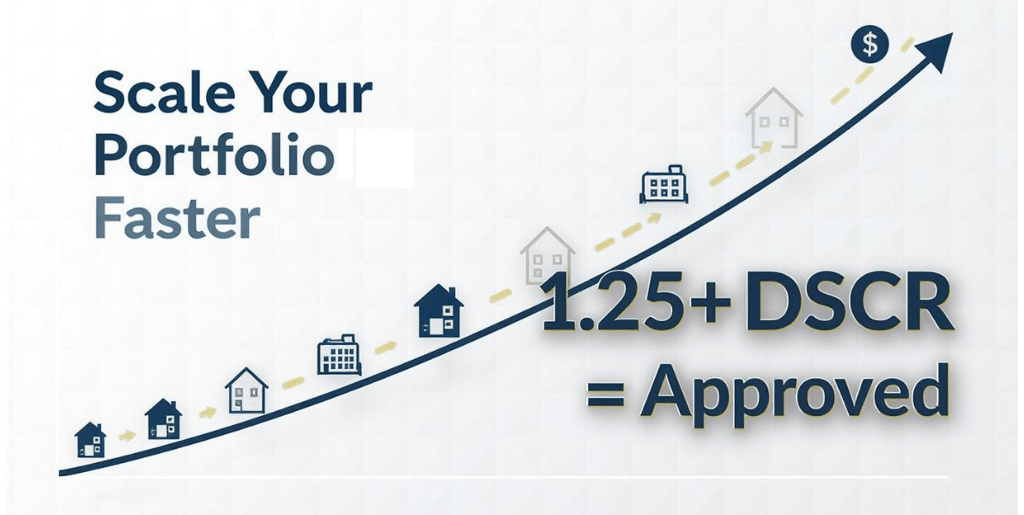
Furthermore, the ability to finance multiple properties becomes easier with DSCR loans. As investors aim to scale their portfolios, utilizing DSCR financing allows them to leverage the cash flow of existing properties to fund new acquisitions. This strategy not only accelerates portfolio growth but also enhances overall investment returns, turning real estate investments into a more manageable process.
Moreover, the use of DSCR loans can provide a strategic edge for seasoned investors aiming to capitalize on lucrative opportunities swiftly. With less stringent financial assessments and a focus on property performance, investors can seize market opportunities without delay, maximizing their return on investment.
Tips for Qualifying for DSCR Loans
When seeking to qualify for Debt Service Coverage Ratio (DSCR) loans, investors can improve their chances significantly by following a strategic approach. One of the first steps is to understand and accurately calculate one’s DSCR, which is defined as the ratio of an investment property's net operating income (NOI) to its total debt obligations. A DSCR of 1.0 means that the property generates just enough income to cover its debt payments. Ideally, investors should target a DSCR of 1.2 or higher, indicating greater cash flow and financial stability.
Choosing properties with strong cash flow potential is also crucial. Investors should focus on real estate markets that display rising demand and rental rates, as these factors contribute to higher NOI. Properties located in prime areas with robust economic growth, low vacancy rates, and desirable amenities tend to perform better and attract more tenants, thus providing a solid cash flow foundation.
Maintaining a good credit score is another essential aspect of qualifying for DSCR loans. Lenders often assess credit history and scores as part of their evaluation process. A higher credit score can enhance an investor’s borrowing power and may lead to more favorable loan terms, including lower interest rates. Investors should regularly review their credit reports and address any discrepancies to ensure their credit scores are as high as possible.
When presenting financial information to lenders, it's important to compile clear and comprehensive documentation. Investors should provide detailed property income statements, tax returns, bank statements, and any other relevant financial documents that demonstrate their ability to manage the investment effectively. A well-organized portfolio of information can instill confidence in lenders and ease the approval process for DSCR loans.
Case Studies: Successful Use of DSCR Loans in Real Estate
Real estate investors continuously seek ways to leverage financing to expand their portfolios, and Debt Service Coverage Ratio (DSCR) loans offer a compelling option. In this section, we will explore two case studies that illustrate successful applications of DSCR loans in real estate investment.
The first case involves an investor, Jane Doe, who sought to acquire a multifamily property in an emerging market. Jane utilized a DSCR loan to finance her purchase because the projected rental income from the property would comfortably cover the mortgage payments. After securing the loan with a DSCR of 1.25, she acquired a ten-unit apartment building. Over the course of three years, Jane strategically managed her property, enhancing its appeal through minor renovations. By doing so, she increased the rental income significantly. Consequently, when she refinanced the property, the increased income allowed her to take out a larger loan against the property’s equity, enabling her to invest in additional real estate.
Another case is that of John Smith, who aimed to invest in single-family homes in a suburban area. Leveraging a DSCR loan, John focused on properties with existing tenants to ensure immediate cash flow. His strategy was predicated on the reliability of rental income to satisfy loan obligations. After acquiring three homes within a two-year span using DSCR financing, John's foresight about the housing market trends paid off. The demand for rental properties surged, and the value of his investments appreciated. This enabled him to sell one property for a considerable profit, allowing him to reinvest in other high-potential real estate opportunities.
These case studies exemplify how investors successfully navigate the world of real estate financing using DSCR loans. The strategic approach in leveraging rental income covers mortgage obligations while promoting portfolio growth, highlighting the profound potential of these financing options for astute investors.
Contact
Helping you secure smart commercial loans
Phone
info@belllending.com
682-312-4533
© 2026. All rights reserved.